Journal
Arabica vs Robusta: What Is the Difference in Your Cup?

Short answer: Arabica and Robusta are the two coffee species behind almost everything you drink. Arabica is sweeter, more aromatic and more acidic, with less caffeine. Robusta is stronger, more bitter and fuller in body, gives a thicker crema and contains almost twice the caffeine. Neither is “good” or “bad” — what matters is the quality of the beans and how they are roasted.
Where do Arabica and Robusta grow?
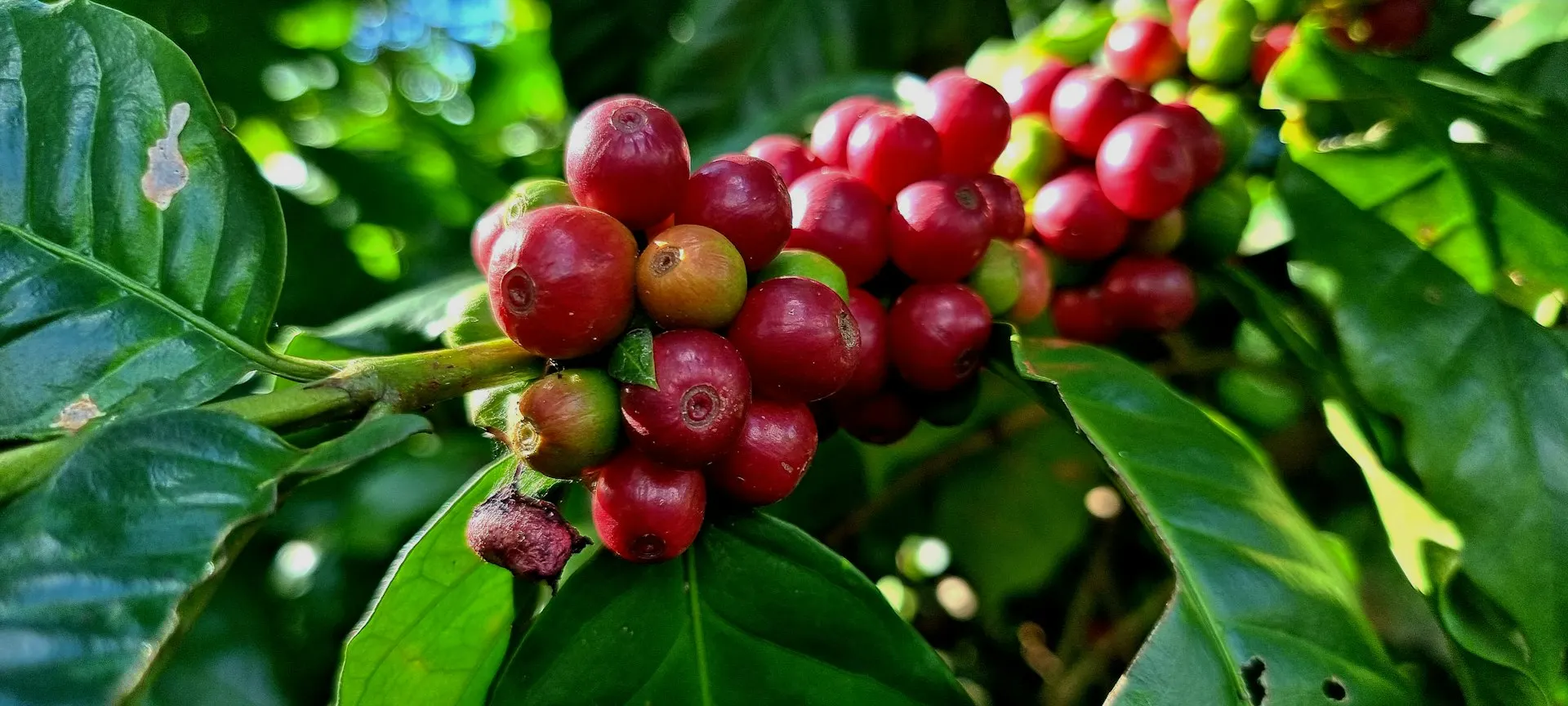
Arabica (Coffea arabica) prefers altitude and mild temperatures, typically between 1,000 and 2,000 metres. It is a delicate plant, more exposed to disease and climate, and it accounts for roughly 60% of world production.
Robusta (Coffea canephora) grows at lower altitudes, tolerates heat and humidity and, as its name suggests, is far more resistant. It makes up most of the remaining production. You can read more about how altitude, climate and soil shape flavour in From the Plantations.
How do they taste different?
| Arabica | Robusta | |
|---|---|---|
| Flavour | Sweet, floral, fruity, chocolate notes | Intense, earthy, woody, cocoa |
| Acidity | Medium to bright | Low |
| Bitterness | Gentle | Pronounced |
| Body | Silky | Full, dense |
| Crema | Fine, lighter | Thick, persistent |
| Caffeine | about 1.2–1.5% | about 2.2–2.7% |
The difference starts in the bean itself. Arabica contains more natural sugars and lipids, which caramelise during roasting into aroma and sweetness. Robusta has more caffeine and chlorogenic acids, which bring bitterness, intensity and that dense, hazelnut-coloured crema.
Which one is used in Italian espresso?
Both. Italian espresso has always been a craft of balance. Northern Italy traditionally favours blends rich in Arabica, more aromatic and rounded; the South, especially around Naples, often adds a larger share of Robusta for strength and crema. A small, carefully chosen percentage of good Robusta can make an espresso feel fuller and longer without making it harsh.
What ruins a cup is not the species but poor beans and a careless roast. Low-grade Robusta roasted too dark tastes of rubber and ash; a fine Robusta, roasted slowly and cooled with air, adds depth that pure Arabica cannot.
Is 100% Arabica always better?
“100% Arabica” on a pack guarantees the species, not the quality. A 100% Arabica can be excellent or ordinary, depending on origin, ripeness at harvest, selection and roast. Choose by how the coffee tastes in your cup and how you drink it: neat espresso rewards aroma, while milk drinks and sugar often benefit from more body.
Key takeaways
- Arabica: sweeter, aromatic, less caffeine, grown at altitude.
- Robusta: stronger, more bitter, thicker crema, almost double the caffeine.
- Italian espresso uses both — the blend decides the balance.
- Bean quality and roasting matter more than the species on the label.
Frequently asked questions
What is the main difference between Arabica and Robusta?
Arabica is sweeter, more acidic and more aromatic, with lower caffeine. Robusta is more bitter and full-bodied, produces a thicker crema and contains almost twice as much caffeine.
Which has more caffeine, Arabica or Robusta?
Robusta. It contains roughly 2.2–2.7% caffeine by weight, compared with about 1.2–1.5% for Arabica.
Is 100% Arabica always better?
Not necessarily. 100% Arabica gives aroma and sweetness, but many classic Italian espresso blends add a share of quality Robusta for body, crema and intensity. The quality of the beans and the roast matter more than the species alone.
Why do Italian espresso blends often contain Robusta?
A measured share of Robusta gives espresso a denser crema, a fuller body and a longer finish, especially when the coffee is drunk with milk or sugar. It is part of the Southern Italian espresso tradition.
At Ferrara Caffè every lot is selected by hand and roasted slowly, whatever its origin. Taste the result in our three coffees, or follow the journey from farm to cup.