Journal
Why We Air-Cool, Never Water-Cool

Most conversations about roasting focus on heat. But one of the most important decisions a roaster makes happens after the heat is switched off: how to stop the roast.
At Ferrara Caffè the answer has always been the same. We air-cool, never water-cool, to preserve the identity of every origin.
The roast doesn’t stop when the flame does
When beans leave the drum they are well above 200°C. Left alone, they would keep roasting in their own heat — sugars would keep caramelizing, aromas would keep developing and, very quickly, the profile the roaster worked for would be gone.
So the beans must be cooled fast. There are two ways to do it.
Water quenching: faster, cheaper, and a compromise
In large industrial roasting, a mist of water is often sprayed onto the hot beans. The water flashes into steam and pulls the temperature down almost instantly. It is efficient, and it has another effect the industry rarely advertises: some of that water stays in the beans, which adds weight.
The trade-off is in the cup. Steam and moisture meet a bean at its most fragile and aromatic moment. Volatile compounds are carried away, the structure of the bean is stressed, and the coffee tends to stale more quickly once the bag is opened.
Air cooling: slower, honest, and precise
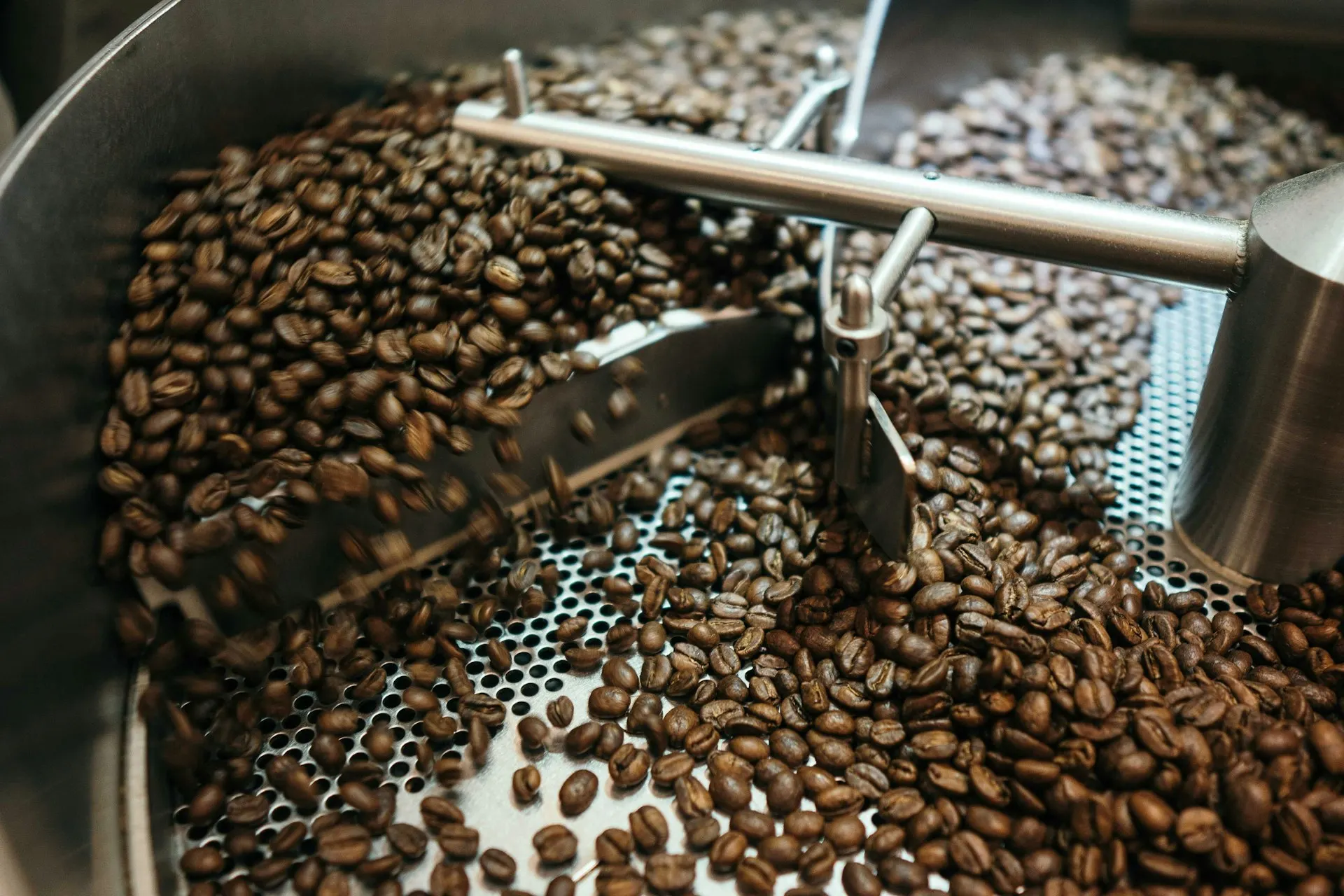
Air cooling does the same job with nothing but moving air. The beans are dropped into a cooling tray, stirred continuously while ambient air is drawn through them, and brought down to room temperature in a few minutes.
It requires more attention and more time, and it adds nothing to the bean. What comes out of the tray is exactly what the roast created — no added moisture, no aromatic loss, no shortcuts.
Why it matters for origin
We choose our beans for their stories: the floral lift of an Ethiopian highland coffee, the chocolate and nut sweetness of a Brazilian one. Those differences are delicate. They live in aromatic compounds that are the first to suffer when a roast is rushed or quenched.
Air cooling is how we protect them. It is why our 100% Arabica Line keeps its jasmine, bergamot and yellow-fruit notes, and why our Limited Editions taste of the farms they came from.
What you notice at home
- Aroma when you open the bag — fuller and more layered.
- Stability — a well-stored bag keeps its character through the two to three weeks after the roast date that we recommend.
- Clarity in the cup — the tasting notes on the package are notes you can actually find.
It’s a small detail in a long process. But we believe coffee should be made the way it should be made: we are in no rush, and we take no shortcuts — not even in the last two minutes.